Research

4 min read

My research begins with a simple conviction. How we imagine the future shapes the decisions we make today. Long before I studied space policy, science fiction taught me to ask what happens when technical ambition meets everyday human life, and what we owe to a fragile planet while we look beyond it. That curiosity still drives my work as a writer, digital humanist and futurist. Whether I am reading a climate novel, taking part in a policy simulation on the Moon Agreement or analysing European space strategy, I am looking at how language opens up certain futures while closing off others.

To investigate those choices without forcing a predetermined answer, I combine literary training with computational methods and audience research. The economist Ronald Coase warned that if you torture the data enough, nature will always confess. I read texts and examine datasets carefully to see what the evidence actually supports, which voices are missing and what readers need in order to question institutional claims. Across my work at KU Leuven, those methods come together around space fluency and a deep commitment to life on Earth.

Strategic Communication in the Space Sector

Space Studies · Master’s Thesis · 2025

Following a single space organisation gives a very narrow view of what matters in orbit. In my 2025 KU Leuven master’s thesis, Strategic Communication in the Space Sector: How Storytelling Shapes Public Perception and Policy, I compared public communications from NASA, ESA, SpaceX and ESPI side by side. Depending on the institution, progress is framed as sending humans into space, building reusable launch vehicles, fostering international cooperation or setting rules for activities in space. I examined how those framing choices shape what the public can see and question about European and international space policy, using the findings to build a practical framework for communicating with different audiences.

  • Corpus analysis in R
  • Institutional discourse
  • Survey data
Explore the thesis method and findings

Digital Content, Communities and Audiences

Digital Humanities · Master’s Thesis · 2024

During my placement at Zerwaste, I used market research and search-query data to establish what prospective readers wanted to know. Those findings shaped the website architecture, the SEO plan and the editorial calendar. I then tracked website and social media analytics to evaluate how audiences responded after publication.

  • Market and keyword research
  • Content strategy
  • Website and social analytics
Research Summary
Thesis
Hacking the Power of Digital Content: Can Intelligent Digital Content Build Communities and Generate Leads in a B2B Environment?
Project context
A Digital Humanities internship at Zerwaste, an operational-excellence consultancy. The thesis covers the 2022–2023 academic year; the degree was awarded in 2024.
Approach
Market research and data collection informed a content plan. Blog posts, case studies and evergreen content were developed around a keyword strategy, alongside regular social publishing.
Findings and limits
The thesis reports increases in visitors, engagement and followers during the project. It emphasises content that answers audience questions throughout the customer journey. These observations are project outcomes, rather than a controlled test of causation.

The project links editorial planning to measurable audience behaviour, while keeping the usefulness of the content central to the strategy.

Source: Digital Humanities thesis, abstract, p. 4; conclusion, pp. 44–45.

In Defense of Science Fiction

Western Literature · Master’s Thesis · 2021

Contemporary fiction offers a distinct way to examine how people live through slow-moving environmental disruption. In this thesis, I used ecocriticism and close reading to compare two novels, analysing how each makes gradual ecological change visible in everyday life and how characters respond to shifting conditions.

  • Ecocriticism
  • Comparative close reading
Research Summary
Thesis
In Defense of Science Fiction: Can Sci-Fi Save the World?
Research question
Can contemporary fiction help readers understand the complexity and implications of human intervention in nature?
Approach
The thesis engages with Amitav Ghosh’s critique of climate silence, then compares how two novels represent the Anthropocene and end-of-world scenarios.
Argument
It argues that science fiction can open up alternative futures and support reflection. Fiction cannot resolve the climate crisis on its own; the thesis makes a case for its place in education and public discussion.

This is a literary argument about the possibilities of fiction, rather than an experimental study of how readers change their behaviour.

Source: Western Literature thesis (2021), abstract, p. 3; conclusion, pp. 53–54.

The Language of Climate Fiction

Digital Humanities · Additional Corpus Study

Using R, I analysed a corpus of seven climate-fiction novels totalling 490,708 tokens. I compared their vocabulary against a reference collection of general bestsellers, then returned to individual passages to see how the texts represent food and water shortages, displacement and damaged landscapes.

  • Corpus analysis in R
  • Keywords and collocations
  • Concordance reading
Research Summary
Paper
A Statistical Look into the Occurrences of the Anthropocene in Cli-Fi.
Material
Seven climate-fiction novels, forming a target corpus of 490,708 tokens, compared with a reference corpus of bestsellers.
Approach
Word frequencies, collocations and keyword analysis, interpreted through concordances and the wider context of the novels.
Findings and limits
The study identifies recurring concerns around migration and displacement, food and water scarcity, and post-apocalyptic landscapes. Its small, selected corpus and preprocessing decisions limit how widely the findings can be generalised.

The paper explores how fiction gives language to environmental anxieties. It describes patterns in selected texts, rather than predicting climate outcomes.

Source: climate-fiction corpus paper, introduction, p. 3; interpretation and conclusion, pp. 21–24.

Foresight, Scenarios and Policy Simulations

Alongside textual analysis, I use scenario planning, living-lab exercises and policy simulations to examine how institutions prepare for emerging space and environmental challenges. Working through structured scenarios allows researchers, policymakers and citizens to test governance questions before technical systems or legal rules are locked in.

In my space policy coursework at KU Leuven, I took part in a simulation exercise on the Moon Agreement, examining how participants representing competing national and commercial interests negotiate over resource governance and international law. At the Apocalyptic Ethics Lab, I used a futures wheel in a collaborative lab setting to trace the long-term social and policy consequences of decisions surrounding the Einstein Telescope.

I applied a similar scenario-based approach in my explainer on satellite dependencies, tracing everyday public services back to the orbital infrastructure they rely on. Exploring a day without satellite data highlights a direct public communication challenge during technical disruptions. While engineers are still investigating an outage, institutions need clear protocols to tell users which services are affected, which alternatives remain available and when the next update will follow.

For a wider look at societal dependence on orbital systems, see Charlotte Van Camp and Walter Peeters, A World without Satellite Data.

Research Approach

Each discipline I have worked in strengthened a different part of how I investigate a topic and communicate what I find. My literary training taught me to read closely for nuance, agency, and what a text leaves unsaid. Working in Corpus-Assisted Discourse Studies (CADS) gave me the computational tools in R to test those observations across hundreds of thousands of words, making sure a striking passage reflects a wider institutional pattern rather than an isolated quote.

Digital humanities added an understanding of how readers actually search for and use information online, which shapes how I structure an argument for different audiences. Finally, scenario exercises and policy simulations taught me to trace the long-term human consequences of technical decisions before they are locked in. Together, these methods guide how I research, verify evidence, and build space fluency through clear, grounded storytelling.

About the images

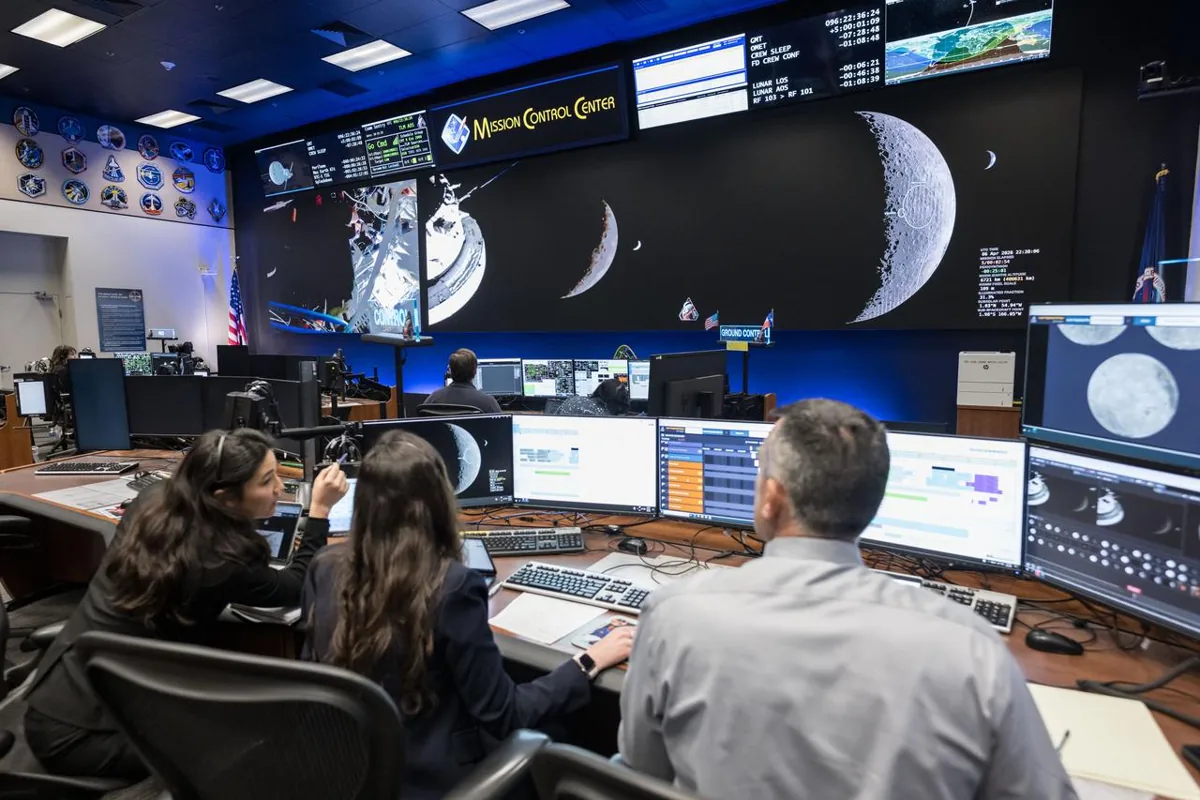
Contextual photographs, rather than images of the research itself. Space Studies: NASA mission control. Library, forest canopy and digital work: Tima Miroshnichenko (Pexels), Adrien Olichon (Pexels) and Artem Podrez (Pexels).